
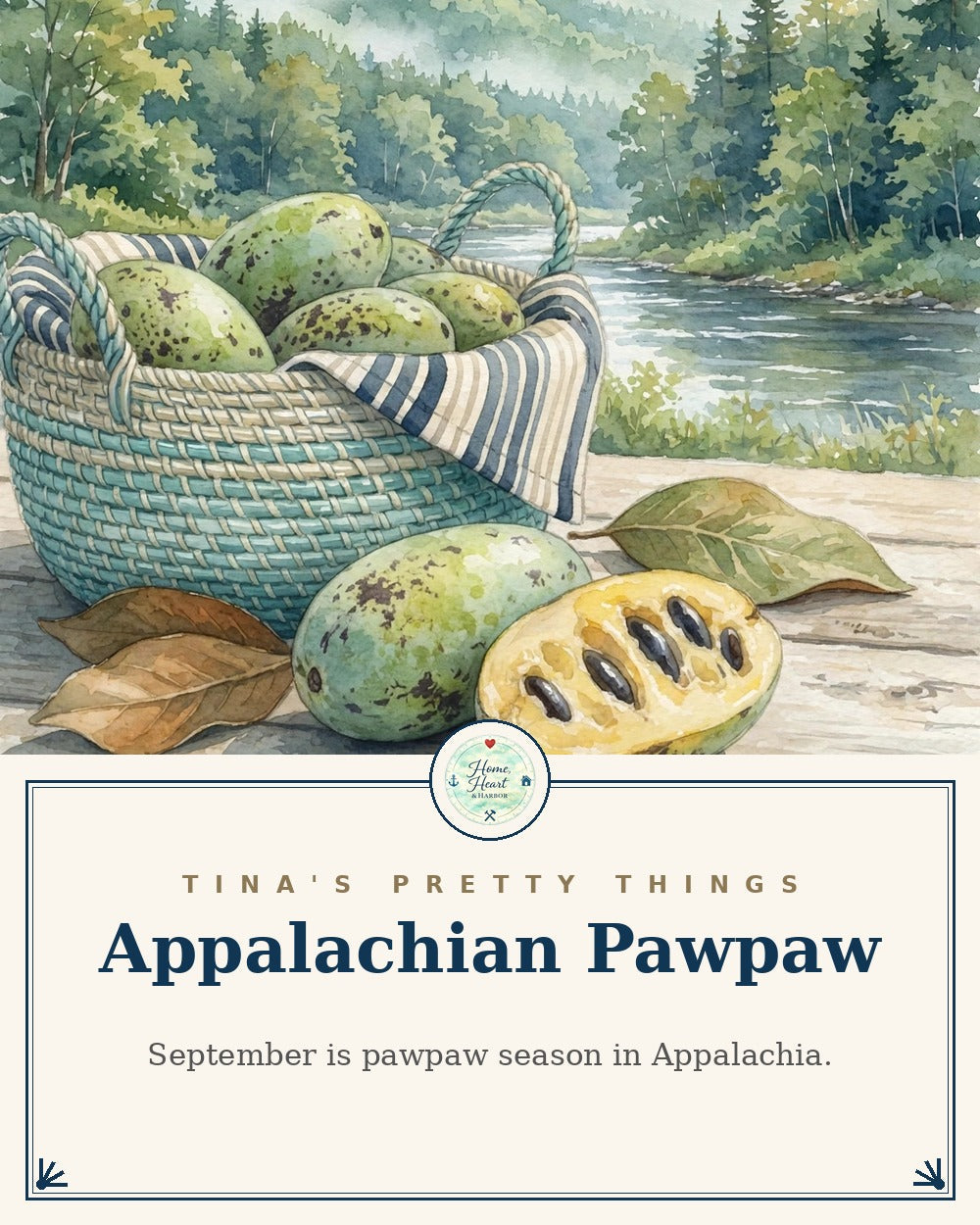
Before pumpkins take over every fall conversation, another fruit is quietly ripening across Appalachia. The pawpaw—Asimina triloba—is native to eastern North America and has deep roots in the woods, farms, and food traditions of the Southeast.
University of Tennessee researchers sometimes describe it as the “Appalachian banana,” a fitting nickname for a soft, custard-like fruit whose flavor is often compared with banana, mango, and vanilla.
September is pawpaw season
Pawpaws generally mature in late summer and early fall, making September one of the best times to look for them in Tennessee and North Carolina. The fruit does not travel or store as easily as apples or pears, which is one reason many people have lived near pawpaw country for years without ever seeing one in a supermarket.
Why the pawpaw fits Home, Heart & Harbor
It sits at the intersection of several things HHH cares about: native plants, regional traditions, learning where our food comes from, and keeping useful knowledge alive. Interest in pawpaws has also been growing among home gardeners and small producers, including in North Carolina and Tennessee.
How to find them
Local farmers markets, specialty growers, native-plant events, and orchards are good places to start during the short harvest season. Pawpaws also grow wild, but do not harvest from public or private land unless collection is permitted and you have the landowner’s permission.
A ripe pawpaw should have some give when gently pressed and usually develops a strong, sweet aroma. Because the fruit is delicate, it is best handled carefully and used fairly soon after ripening.
Simple ways to use pawpaw
The easiest way is also one of the best: chill the fruit, cut it open, remove the large seeds, and spoon out the flesh. The pulp can also work well in smoothies, quick breads, custards, ice cream, and other recipes where a creamy fruit puree makes sense. The skin and seeds are not typically eaten.
Thinking about growing one?
Pawpaws can be an interesting native addition to a home landscape. North Carolina Cooperative Extension notes that fruit production generally benefits from having genetically different pawpaw trees for cross-pollination. Young trees naturally tolerate some shade, while established trees can produce well with more sun when moisture is adequate.
A regional fruit worth remembering
Part of the appeal of the pawpaw is that it does not feel manufactured into a trend. It has been here all along. For HHH, that makes it more than a novelty—it is a reminder that sometimes the most interesting things to learn, cook, grow, and pass along are already part of the place we call home.
Sources for further reading: N.C. Cooperative Extension and the University of Tennessee Institute of Agriculture both publish practical pawpaw growing and research information.